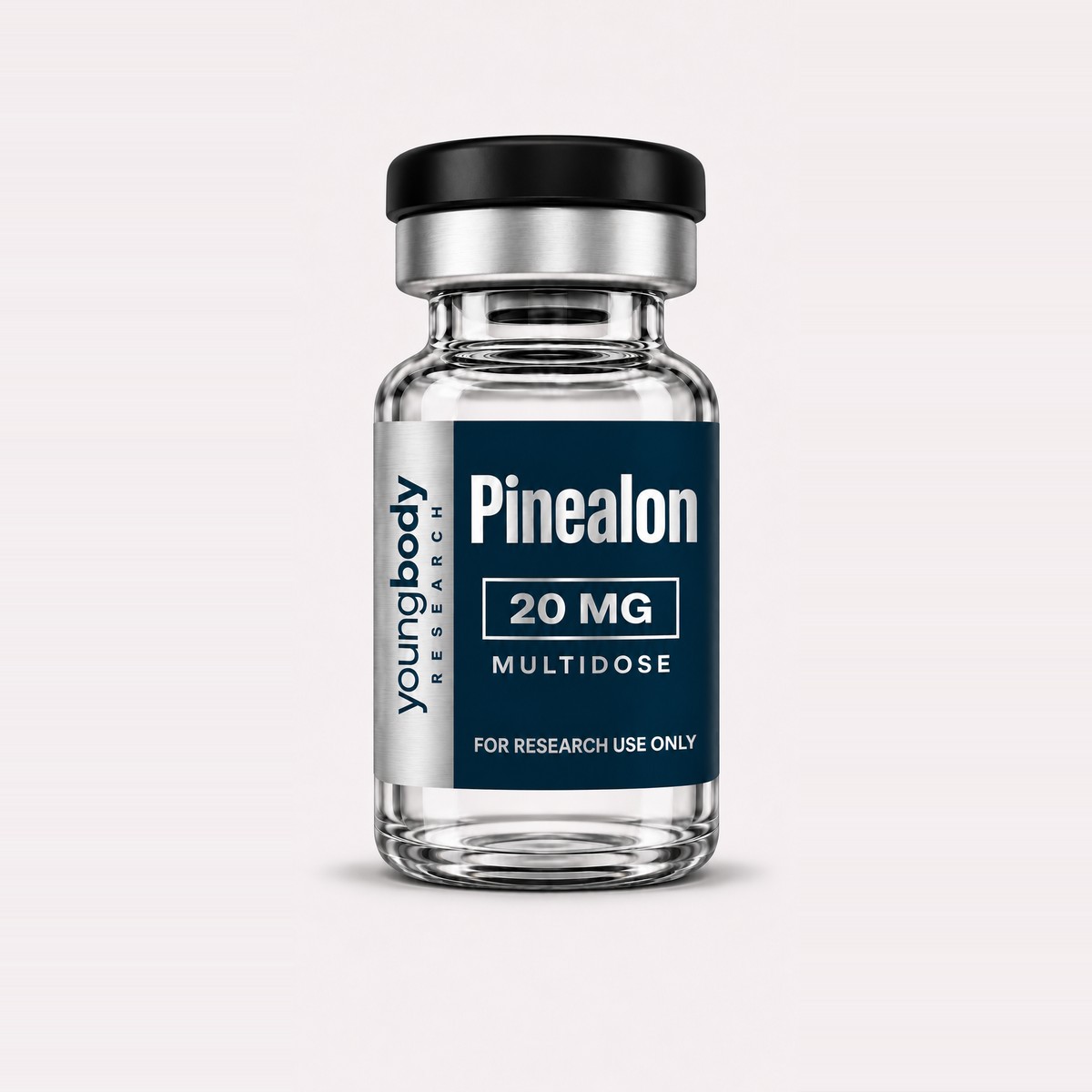
 Certificate of Analysis available for every lot≥99% purity, HPLC & mass-spec verifiedFor research use only. Not for human consumption.
Pinealon is a three-residue peptide (Glu-Asp-Arg) in the group of short peptides called bioregulators. It is supplied for laboratory research on peptide effects at the cellular level.
Molecular Formula: C62H98N16O22
Molecular Weight: 1419.556 g/mol
Sequence: Gly-Glu-Pro-Pro-Pro-Gly-Lys-Pro-Ala-Asp-Asp-Ala-Gly-Leu-Val
CAS #: 137525-51-0
Purity: 99% HPLC
Pinealon is used in cell-culture and rodent studies of oxidative stress, cell viability and cell-cycle markers. Researchers also use it to examine gene-expression changes in neural and skin-cell cultures. Other work looks at caspase-3 activity and irisin expression. These are laboratory research uses.
Pinealon is not reported to bind a classic cell-surface receptor. Published work in HeLa cells describes short peptides entering the cell and nucleus and interacting with DNA, which points to effects on gene expression. Studies also report changes in cell-cycle markers, reactive oxygen species, caspase-3 activity and serotonin-pathway expression in cultured cells.
Studies in rats have examined pinealon in oxidative-stress and hypoxia models, with readouts such as reactive oxygen species and cell death in neurons. Cell-culture work looked at skin cells from young and old rats and at cortical cells. These are laboratory and animal-model findings only.
Supplied as a lyophilized powder. Identity and purity are normally confirmed by HPLC and mass spectrometry. Refer to the Certificate of Analysis for the lot you receive.
Peptides are shipped lyophilized (freeze-dried), a state that keeps them stable in transit. Keep vials cold and away from light on arrival.

Young Body supplies research compounds exclusively to qualified researchers and laboratories for in vitro and laboratory use. Please confirm before continuing.
By proceeding you affirm the statements above are true. Products are not for human or veterinary use, not for use in diagnostic procedures, and have not been evaluated by the U.S. Food and Drug Administration.
